

Italian craftsmanship, research and contemporary vision come together in the collaboration between Ferrari Fashion School and Fondazione Le Costantine.
The project involved second-year students from the Undegraduate Course in Fashion Design in an educational experience focused on developing women’s resort capsule collections. The project created a dialogue between fashion education, Made in Italy craftsmanship and sustainability.
Le Costantine: Textile Heritage and Social Impact
Based in the province of Lecce, Fondazione Le Costantine preserves a textile tradition deeply rooted in the culture and heritage of Salento.
Active since 1900, the Foundation protects and promotes traditional weaving techniques through a model focused on sustainability and social inclusion.
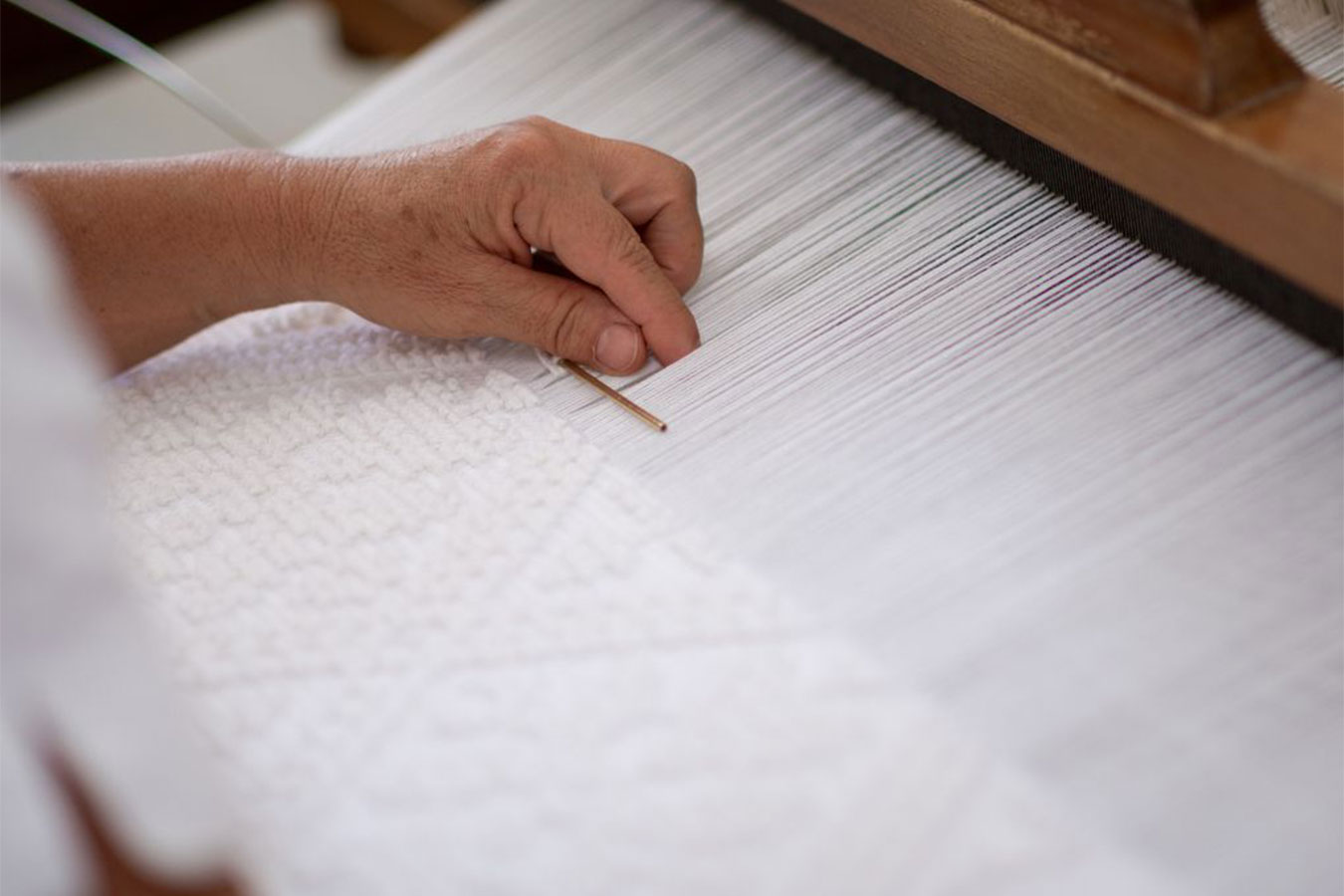
Its textiles are woven on manual looms by local artisans, preserving skills and knowledge passed down through generations.
Le Costantine’s manufacturing excellence has also attracted the attention of the international fashion industry. Among its most significant collaborations is its work with Maria Grazia Chiuri, formerly Creative Director of Dior and now at FENDI.
Textile Craftsmanship and Made in Italy Culture
The collaboration with Le Costantine gave students the opportunity to engage directly with the cultural and creative value of Italian textile craftsmanship.
Fabric was not approached simply as a material to work with. Instead, it became a starting point for exploring a story, a territory and a heritage of skills and knowledge.
This approach reflects the educational philosophy of Ferrari Fashion School, where craftsmanship, innovation and creative experimentation contribute to developing each student’s professional identity.
The Project: Sustainable Resort Capsule Collections
The collaboration took shape through an academic project focused on the creation of women’s resort capsule collections.
The project was coordinated by designer and lecturer Lika Kubaneishvili, Course Leader of the Undegraduate Course in Fashion Design and Creative Director of Unknown Artisan.
Students were given a specific challenge: to integrate reclaimed materials and textile offcuts from Le Costantine’s artisanal production with natural fabrics.
The aim was to transform these materials into contemporary collections while developing a conscious relationship between aesthetics, design and sustainability.
From Cultural Research to Fashion Design
Each student developed their capsule collection starting with research.
Materials, cultural references, shapes and inspirations were interpreted to create outfits reflecting a sophisticated, contemporary lifestyle.
Throughout the project, students experienced some of the key stages of a fashion designer’s creative process:
- concept research and development;
- material research;
- creative reuse of textile offcuts;
- development of silhouettes and outfits;
- definition of a personal aesthetic identity;
- final presentation of the capsule collection.
The result was a dialogue between craftsmanship and innovation, where creativity begins with knowledge of and respect for the material.
Learning by Doing: Studying Fashion Design Through Real Projects
The collaboration with Le Costantine is an example of Ferrari Fashion School’s experiential learning approach.
The School combines cultural and technical knowledge with design projects, workshops and opportunities to engage with professionals and organisations from the fashion industry.
Students can therefore apply what they learn throughout their academic journey to concrete briefs and real-world contexts.
The Le Costantine project brings this methodology directly into the heritage of Made in Italy, connecting a new generation of fashion designers with artisanal skills deeply rooted in the local territory.
The Final Presentation of the Capsule Collections
The project concluded with a final presentation attended by Cristina Rizzo, President of Fondazione Le Costantine.
During the presentation, the contemporary approach, freshness and consistency of the students’ proposals were highlighted.
The capsule collections demonstrated different ways of reinterpreting traditional textile craftsmanship through a contemporary fashion language, while respecting its history and identity.
Sustainable Fashion Also Means Preserving Skills and Territories
Sustainability in fashion is not only about choosing the right materials.
It also means questioning how resources are used, preserving artisanal skills and recognising the value of the communities and territories where this knowledge originated.
The collaboration between Ferrari Fashion School and Le Costantine introduced students to this perspective through a practical design experience.
Taking a textile offcut and transforming it into part of a new design means learning to look at materials differently. It means recognising their value before imagining a new purpose for them.
Through experiences like this, fashion education can contribute to building a more conscious and responsible fashion culture.
Educating the Fashion Designers of Tomorrow
The Undegraduate Course in Fashion Design at Ferrari Fashion School guides students in developing the creative, cultural and technical skills required to design contemporary fashion collections.
The programme integrates research, material knowledge, fashion design, pattern making, tailoring and visual communication.
Academic projects such as the collaboration with Le Costantine allow students to put these skills into practice while engaging with organisations that represent Italy’s cultural and manufacturing heritage.
Discover the Undegraduate Course in Fashion Design at Ferrari Fashion School and turn your creative vision into professional skills.
