

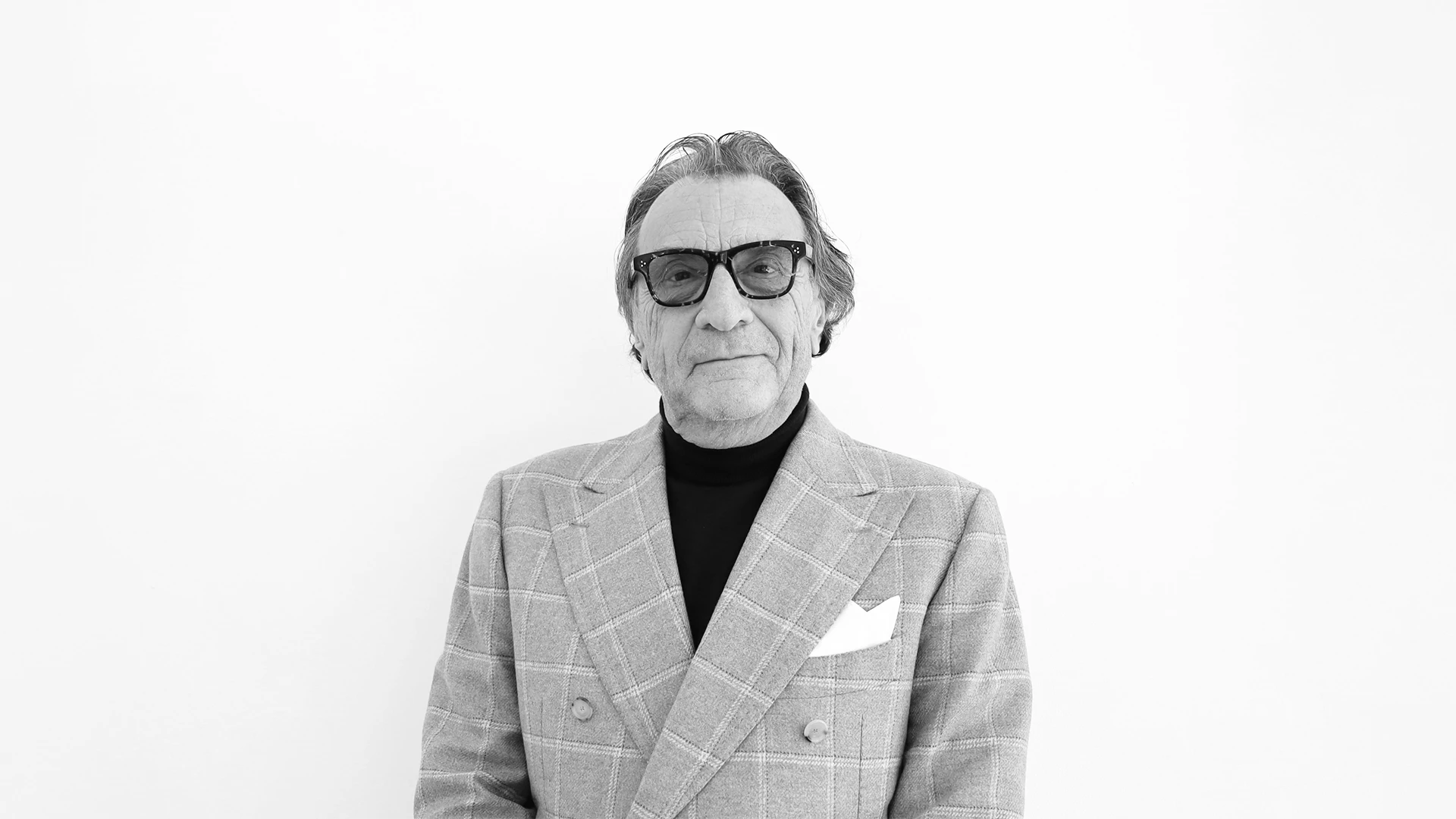
Anna Lottersberger, Dean of Ferrari Fashion School, recently interviewed Luciano Bandi, Lecturer of the Master of Arts in Fashion and Luxury Management. Their discussion explored Bandi’s extensive journey in the luxury textile industry, focusing on key topics such as maintaining material quality, implementing sustainability in supply chains, and the importance of vertical integration. They also addressed how luxury brands can balance innovation with traditional craftsmanship and shared effective marketing strategies, along with valuable advice for aspiring managers in the luxury fashion sector.
Luciano Bandi is a textile industry professional whose career began in 1978 as a product manager at Filatura di Grignasco. In 1983, he moved to Loro Piana, where he contributed to the establishment of a division for cashmere yarns. He concluded his career as the commercial director and a member of the Board of Directors at Zegna Baruffa Lane Borgosesia, also dedicating himself to training the new generations in the sector.
Can you share a bit about your journey in the luxury textile industry and your different roles during your career? How did it all started?
I began my collaboration with Loro Piana in 1983. In those years it was just a well-known manufacturer for the production of high quality fabrics, produced with the most precious fibers becoming one of the most important supplier for the world of luxury, because the promotion of the Loro Piana brand for the finished products just began at the beginning of the new century. Since the 60s of last century Loro Piana was the supplier of the luxury market and the “haute couture” that was completely different from today. The clothes were of a sober elegance, where value was given to the garment by quality and comfort.
The luxury fashion market is supposedly known for its emphasis on material quality and innovation. How do brands ensure that these values are maintained throughout the supply chain?
Today it is very important not to confuse the real lux with the brand. Often automatically if a brand is very well known or very expensive, it is automatically referred to as luxury product. The luxury product is made of quality, experience, research and specialization. Innovation is key to achieving the best efficiency, but it must respect the basics of luxury. Brands can be sure to maintain very high-quality standards only if they check the supply chain, identifying high-level suppliers and not seeking maximum profit by looking for suppliers with more competitive prices. Maintaining long-term relationships with the same suppliers is the first and most important guarantee of quality. Sustainability has become a key concern in the luxury industry.
Sustainability has become a key concern in the luxury industry. How do luxury companies implement sustainable practices into their supply chain, from sourcing raw materials to final production?
Today we talk a lot about sustainability but it has many faces. The starting point is to preserve the planet through a production cycle that respects very precise rules to minimize pollution. The starting point is to define what product to make. Green design is the basis of a whole production cycle, starting from the raw material, to go through the less aggressive chemical products, until the moment when the product will be abandoned because it can no longer be used. To be sure that all elements of the supply chain are organised towards the greatest possible sustainability, two things are important. The continuity of the relationship with its suppliers as seen above and research. This will help identify the best opportunities the market can offer.


