

What does it take to sustain a career in fashion beyond creativity alone?
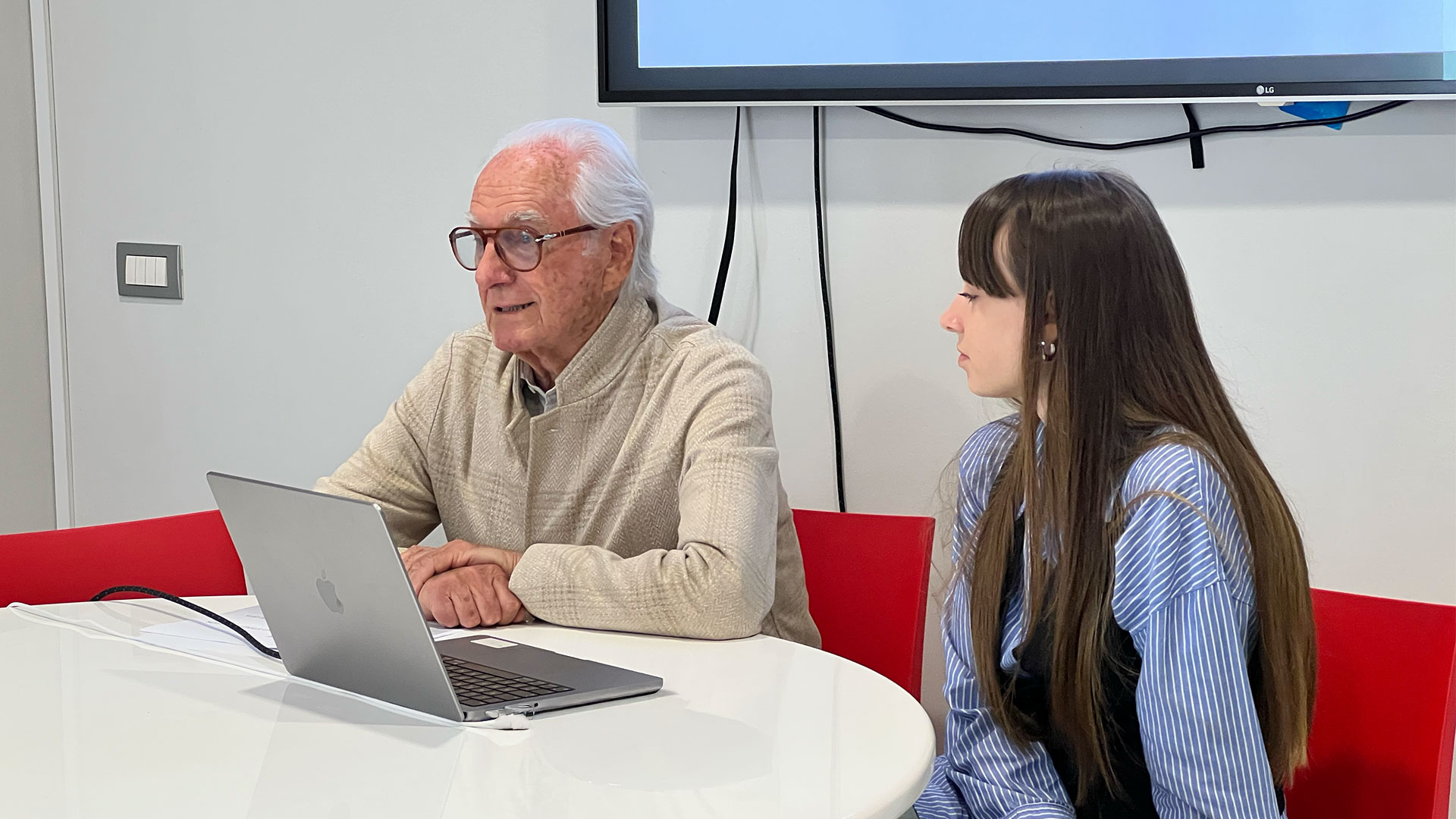
At a moment when the fashion industry is increasingly shaped by accelerated trend cycles, AI-driven forecasting and growing pressure on brands to maintain both identity and commercial relevance across global markets, Ferrari Fashion School welcomed Maurizio Baldassari for a guest lecture with students from the Master in Fashion and Luxury Management and ISG. The session offered not only a retrospective of Baldassari’s career, but a broader reflection on what it means to sustain creative coherence within an industry built on constant transformation.
From Italian retail foundations to an international design practice
Baldassari’s trajectory spans decades of international experience across design, retail and brand development. His early career within the Italian retail system, notably at La Rinascente, placed him in close proximity to the evolving landscape of contemporary fashion and emerging designers such as Giorgio Armani in the early stages of his career. This environment shaped his understanding of fashion not only as design, but as a system of distribution, positioning and consumer interaction. From his first fashion show in 1984 at the Laforet Museum in Harajuku, Tokyo, he expanded into the Japanese market and later into broader international contexts, developing collections such as JUDGER in 2001, presented in Beijing. Across these experiences, Baldassari established a design approach rooted in Italian craftsmanship while consistently engaging with global markets.
Today, through his eponymous label Maurizio Baldassari, he continues to explore a vision of contemporary menswear centered on material research, functionality and understated luxury. Rather than following short-term visibility, the brand has maintained a consistent language built around longevity and product identity, a strategy that feels increasingly significant within a market dominated by speed and overproduction.
Between creative vision and economic reality
At the center of the lecture was the relationship between creativity and survival within fashion. “That of Fashion Design is one of the most fascinating professions I know, but to stay afloat it is essential that the garments leave the shop,” Baldassari stated, grounding the conversation in the economic sustainability often overshadowed by the industry’s image-driven surface.
The discussion became particularly relevant in the context of current debates surrounding global luxury markets and the evolving meaning of “Made in Italy.” During the session, students raised questions about how a brand can preserve a coherent Italian identity while operating across markets such as Japan, China and the United States. Baldassari approached the topic not as a question of marketing alone, but of consistency: maintaining recognizable values, quality and design language regardless of geography.
Fashion beyond visibility
Rather than presenting fashion as a sequence of trends or isolated creative moments, the lecture framed it as a long-term system of decisions, adaptation and positioning. For students, the conversation offered a more grounded perspective on the realities of building a career within fashion today, where visibility alone is no longer enough to sustain relevance.
As the industry increasingly navigates automation, global competition and shifting consumer expectations, the lecture ultimately raised a broader question: in a system obsessed with novelty, how does a brand remain recognizable over time without becoming static?
