

What happens when colour is removed from the design process, leaving shape, texture and construction as the primary tools of expression?
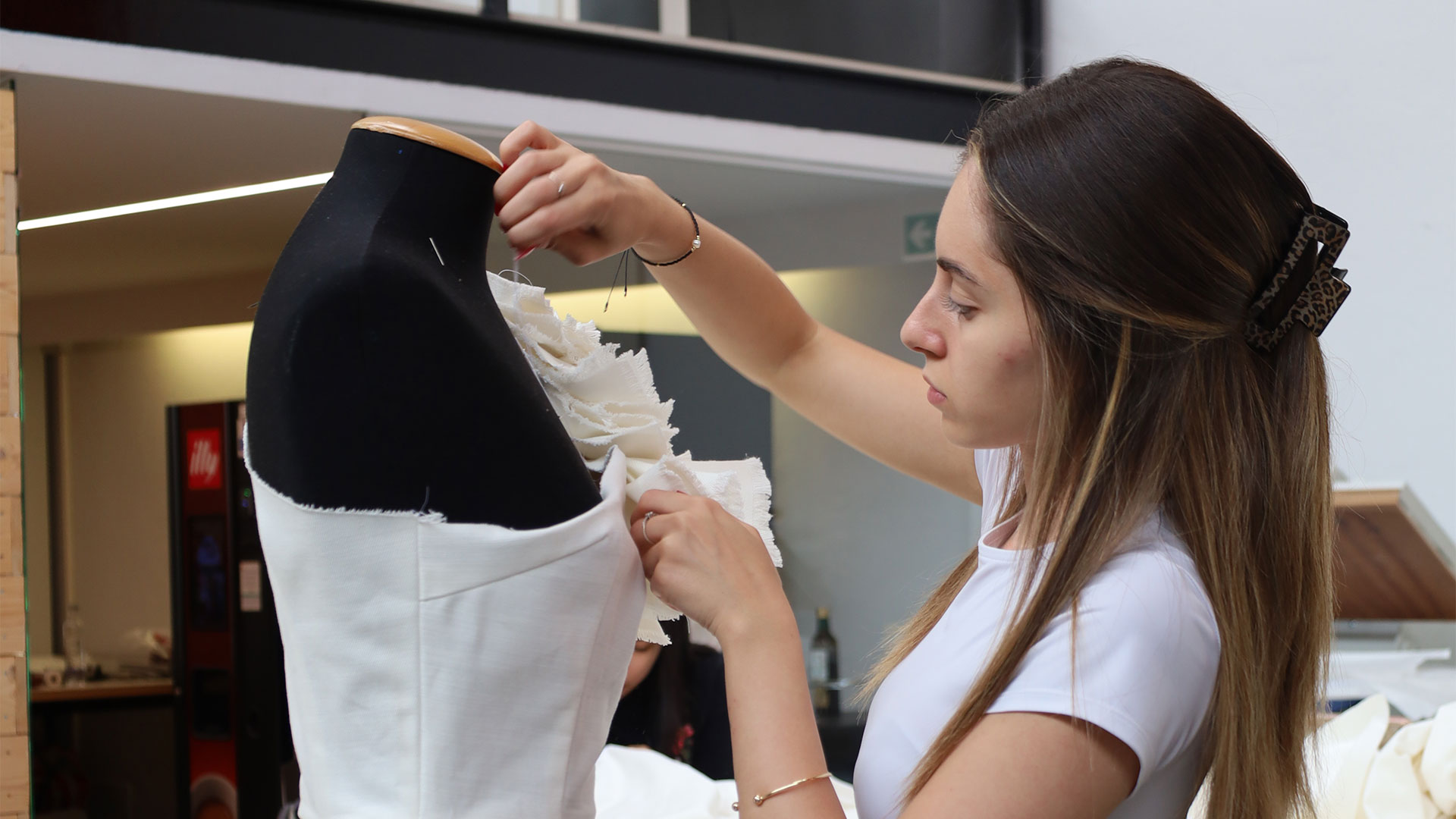
This question formed the foundation of the White Project, a collaborative initiative developed between Ferrari Fashion School and Berto Industria Tessile. Designed as an exploration of form, materiality and textile experimentation, the project challenged students to work exclusively with white and ecru denim, shifting attention away from colour and towards silhouette, volume and construction.
Presented to first-year students from the Bachelor of Arts in Fashion Design, the initiative introduced participants to a design methodology rooted in experimentation and technical development. By limiting the colour palette, the project encouraged a deeper understanding of how garments communicate through structure, proportion and fabric manipulation rather than through visual ornamentation.
Denim as a Creative Laboratory
At the centre of the collaboration was denim, a material deeply connected to both industrial innovation and contemporary fashion culture. Berto Industria Tessile provided a selection of fabrics ranging from lightweight to more structured denim qualities, including recovered, stock and imperfect materials. This approach not only highlighted the versatility of denim as a design medium but also introduced students to current conversations around resource management and responsible production.
Working within a palette ranging from white to natural ecru, students were invited to develop a dress for Spring-Summer 26, exploring volume, draping, layering and textile manipulation techniques. The possibility of combining different denim weights and surface treatments further encouraged experimentation with texture and three-dimensionality.
Design Beyond Colour
A key objective of the project was to investigate how design functions when colour is no longer the dominant visual element. Through pattern development and garment construction, students focused on the relationship between shape and material, refining their understanding of tailoring techniques and garment architecture.
The project also incorporated reflections on zero-waste design methodologies, encouraging participants to consider how sustainability can be integrated into the creative process without limiting innovation. In this context, design became not only an aesthetic exercise but also an opportunity to explore more conscious approaches to fashion development.
Bridging Education and Industry
Throughout the project, students learn how to engage directly with industry professionals from the first year of their BA, presenting concepts, selecting fabrics and receiving feedback during review sessions with the company. This exchange offered valuable insight into professional design processes, from initial research and concept development through to pattern making and garment production.
By combining technical expertise, creative experimentation and sustainability considerations, the White Project reflected the increasingly interdisciplinary nature of contemporary fashion design. More than a garment development exercise, it invited students to rethink the role of material, construction and responsibility within the design process, demonstrating how limitations can often become catalysts for innovation.
