

What does it mean today to build a visual narrative in fashion?
The boundaries between styling, photography, fashion film, art direction and content production are becoming increasingly fluid. At the same time, Artificial Intelligence is transforming the way images are conceived, produced and experienced.
As technology expands creative possibilities, deeply human skills such as research, visual culture, taste, storytelling and collaboration become even more valuable. For the new generation of fashion image-makers, mastering a single discipline is no longer enough: the challenge is to build an entire visual universe.
This evolution is reflected in the work of students from Ferrari Fashion School’s Master in Fashion Styling and Art Direction and Master in Fashion Photography and Fashion Film.
From Fashion Styling to Building a Visual Universe
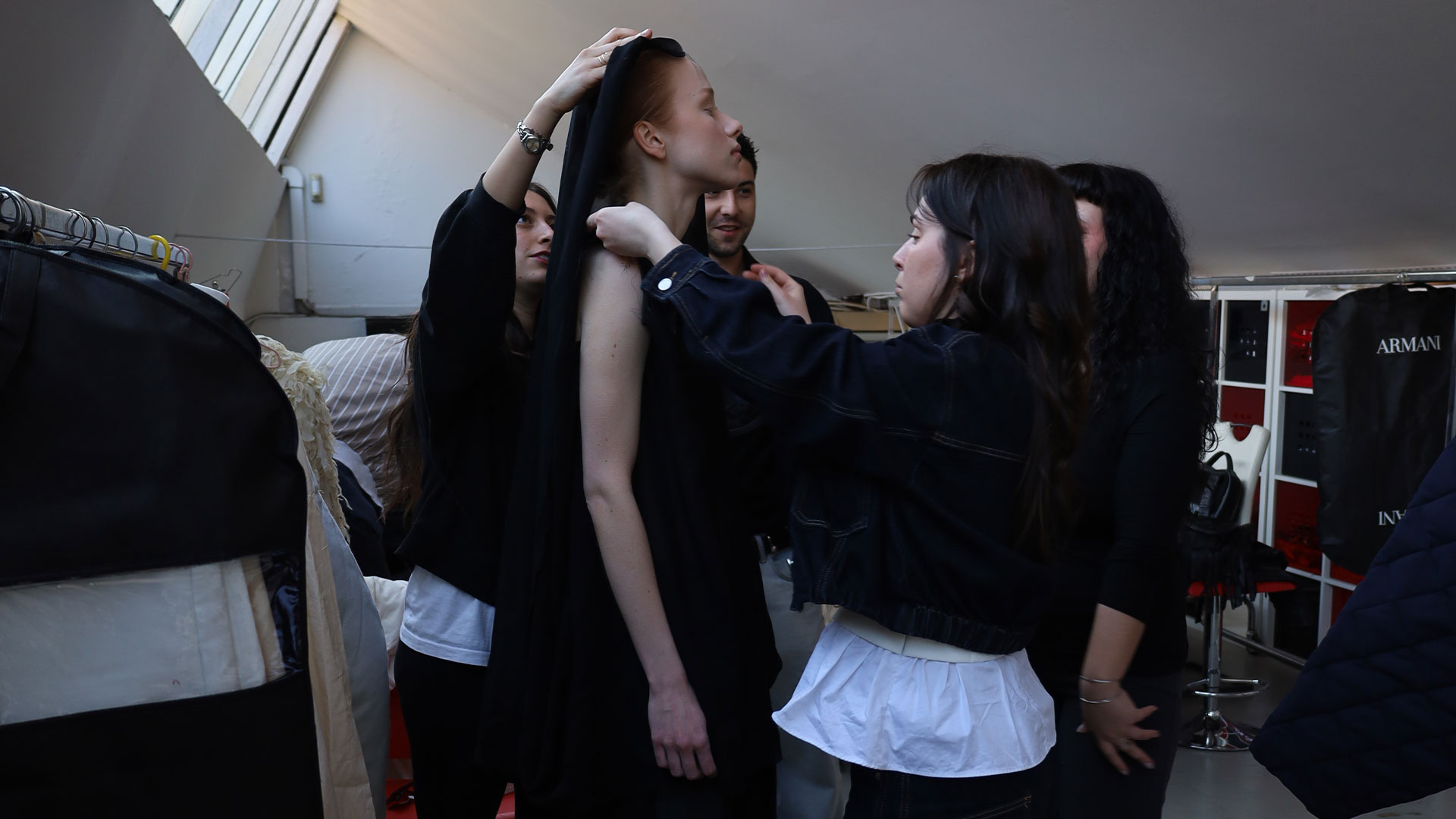
The role of the fashion stylist now goes far beyond selecting clothes and accessories. Styling increasingly interacts with art direction, casting, photography, set design, moving image and brand identity.
Throughout the year, students from both Master’s programmes collaborate on seven fashion shoots conceived and produced from scratch, under the mentorship of Riccardo Carrapa, Programme Leader of both courses.
Each shoot begins with a concept and develops through research, art direction, styling and production. Students select models, locations, garments and accessories, while collaborating with Diadema Academy to define hair and make-up in line with the project’s visual identity.
The seven productions allow students to experiment with different creative languages and progressively build a personal portfolio. A selection of projects also appears in the School’s annual Yearbook, distributed to more than 200 industry professionals.
Fashion Photography: The Photographer Becomes an Image-Maker
Fashion photography now exists alongside digital manipulation, CGI and generative tools.
Hybrid production brings together traditional photography and filmmaking with AI-assisted workflows and new forms of digital image construction. Students explore lighting, composition and shooting alongside editing, colour grading, post-production and emerging Artificial Intelligence tools.
Alberto Pelayo, an Image Maker and Art Director based in Milan, works across photography, retouching and digital technologies, with experience for brands including Versace, Louis Vuitton, Diesel and Moschino.
Andrea Olivo, a Milan-based fashion photographer and director, works between still and moving image, with editorials for GQ, Elle and Vanity Fair and campaigns for brands including Fendi, Max Mara and Diesel.
Different approaches, united by one principle: photography today means creating images that communicate a point of view.
Fashion Film: Telling Fashion Through Movement
Fashion film is also evolving. It can be cinematic or experimental, narrative or abstract, designed for the big screen or for a vertical format.
What matters is creating a visual language in which styling, movement, sound, editing and direction work together.
Students collaborate on the creation of a short fashion film, following the entire process from concept, art direction and styling to filming and post-production.
The project is led by Zion Lacroix, a Milan-based filmmaker and multidisciplinary author whose research explores identity, alienation and perception through experimental audiovisual narratives.
Moving from photography to film means asking a different question: how does an image unfold over time?
Creative Production: What Happens Behind a Fashion Image
Behind every fashion image is a system of decisions. Budgets, casting, locations, agencies, hair and make-up, press offices, fashion archives, schedules and post-production all determine whether a creative concept can become a real project.
Johanna Persson Cordioli brings more than 17 years of international experience across talent management, creative production, casting, PR and visual storytelling. As co-owner of Aura Photo Agency, she works with a network of professionals across fashion, beauty and lifestyle.
Production, therefore, is not simply the organisational phase that follows creativity. It becomes an integral part of art direction.
Visual Culture and Research: Building a Point of View
Technical skills alone are not enough to create an image-maker. Visual culture, research and the ability to interpret references become even more important when generating images is increasingly easy.
Federica Meacci, fashion editor, stylist, journalist and lecturer, brings two decades of experience across fashion, publishing and branded content. Her approach encourages students to understand the cultural context of the images they produce.
In the age of algorithms, knowing how to create an image first means knowing how to read one.
AI in Fashion: The Value of Authorship
As Artificial Intelligence becomes more present in visual image production, questions of authorship, originality and meaning become increasingly important.
Students explored these issues through a guided visit to Artificial Beauty with artist Andrea Crespi at Fabbrica del Vapore in Milan. The exhibition placed classical beauty and synthetic bodies, human and artificial, physical and digital in dialogue.
If technology can generate increasingly convincing images, the question becomes: what truly gives an image meaning?
Fashion Industry: Learning from Image Professionals
Direct interaction with professionals allows students to observe the image-making system from different perspectives.
Piermattia Aiello and Davide Salvatore of NoCarbStudio work across styling, image consulting and creative direction for fashion, publishing and entertainment.
Ludovica Zanotti, Image Buying Director at Dolce & Gabbana, brings the perspective of an international fashion house. Paola Corapi, Senior Photo Editor at ICON Magazine, focuses on how photography is commissioned, selected and developed within contemporary publishing.
These different viewpoints help students understand how creative professionals, brands and editorial teams collaborate around the same image, while beginning to build their own industry network.
From Specialisation to Authorship
Fashion still needs specialists. A stylist must know collections, a photographer must understand light, a filmmaker needs rhythm and narrative skills, and a producer must know how to manage complex projects.
Increasingly, however, each professional also needs to understand what happens beyond the boundaries of their own role.
Across fashion styling, photography, fashion film and production, students learn to collaborate without losing their individual point of view. Because while the tools used to create fashion images continue to evolve, the most valuable skill may remain deeply human: having something worth showing and knowing how to show it to others.
