

What if design is no longer about objects, but about systems?
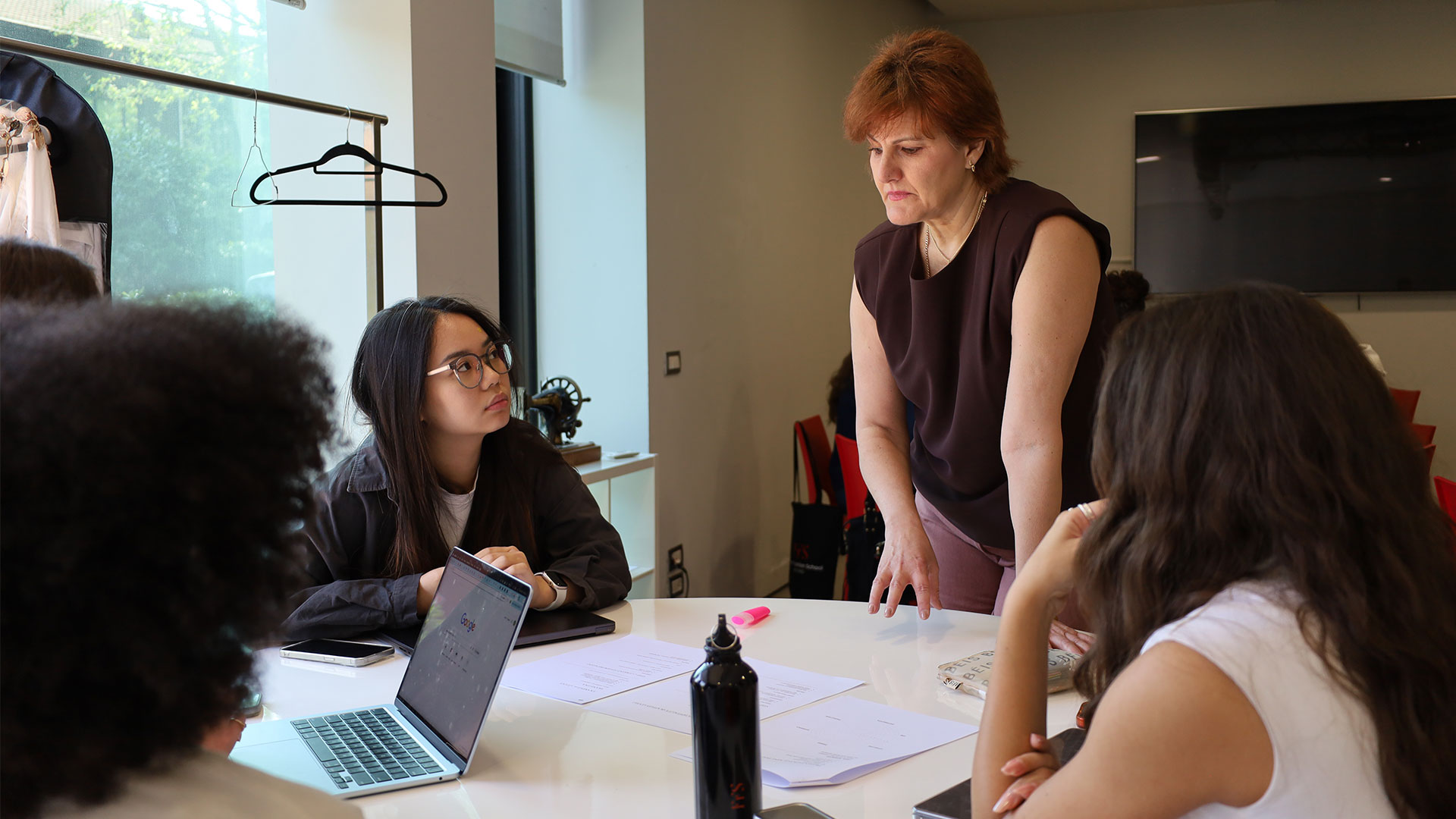
At a time when design is increasingly evaluated not only through aesthetics, but through systems, materials, and long-term impact, a shift further reinforced by evolving European regulations such as the Extended Producer Responsibility (EPR) policy, a guest lecture at Ferrari Fashion School brought together Master’s students in Fashion and Luxury Management, alongside ISM students from France on a two-month program focused on Brand Synergy and Advanced Marketing & Brand Management. The session welcomed Tatiana Maino, founder of Milan-based OOCCA, a circular furniture platform and partner of Ferrari Fashion School that also welcomes students for internship opportunities, to challenge one of the industry’s most established assumptions: ownership.
From Linear Waste to Circular Logic
“What made me question the traditional model was the amount of waste created by linear thinking,” Maino explains, reflecting on decades of experience in interior design across high-end residential and commercial projects. For her, the issue was not only aesthetic, but structural, rooted in how value is defined and consumed over time.
Within OOCCA, furniture is no longer treated as a fixed product, but as part of an ongoing system of use, return, repair, and reconfiguration. This reframes design as a continuous process rather than a final output, where longevity becomes a key metric of value creation.
Beyond Materials: Rethinking Sustainability
Rather than limiting sustainability to materials, OOCCA shifts the focus toward systems and supply chains. “Materials alone are not enough if the system around them remains unchanged,” she notes, highlighting the gap between visible sustainability claims and operational reality. This becomes particularly relevant in hospitality, where renovation cycles generate waste at scale.
At the core of OOCCA’s model is a subscription-based structure that positions furniture as a service rather than ownership. This raises a strategic question for future brand leaders: are circular business models truly transforming industries, or simply rebranding existing consumption systems under new language?
Parallels with the Fashion Industry
The discussion naturally extends into fashion, where similar structural pressures around overproduction and seasonal cycles persist. “Both industries are dealing with the same structural problem, just expressed in different materials,” Maino observes, pointing to clear opportunities for cross-industry learning in design and brand management.
With upcoming visibility during Milan Design Week 2026 through the exhibition “ÉCORCHÉ – Anatomia di un Mobile,” OOCCA continues to translate its circular methodology into spatial experience, revealing the hidden architecture of design systems.
For the students in attendance, the lecture reframed a central question: in luxury and fashion today, value is no longer defined only by creation, but by how intelligently a system sustains, adapts, and regenerates over time.
